





How to Improve Handwriting in 7 Days
Post Date : January 7, 2026Shaky lines, cramped letters, and uneven slant turn simple notes into puzzles, but this 7-day plan rebuilds your English script through focused daily drills. Each day targets one skill layer for clear, confident handwriting after day seven. A smooth fountain pen helps you keep pressure light and strokes steady; Rorito’s fountain pens are designed for comfortable, consistent writing, so you can explore our fountain pen collection and choose what suits your grip and daily use.
How to Improve Handwriting in 7 Days: The Routine
Day 1 – Reset Basics and Tools for Better Handwriting
Most “bad handwriting” is not a talent issue. It is a setup issue: tight grip, collapsed posture, and a pen that rewards heavy pressure. Today is about changing the conditions so that neat writing becomes easier to repeat.
Sit tall with both feet flat. Angle the paper about 30° to your writing side (reverse the tilt if you are left-handed), so your forearm can move freely. Use a relaxed tripod grip: thumb and index finger guide the barrel lightly, middle finger supports underneath, and your knuckles should never turn white.
On lined paper, warm up with slow rows of straight downstrokes and smooth ovals. Then write the lowercase alphabet once, carefully. Keep pressure light and make every letter sit cleanly on the baseline. Do not chase speed yet. Chase control.
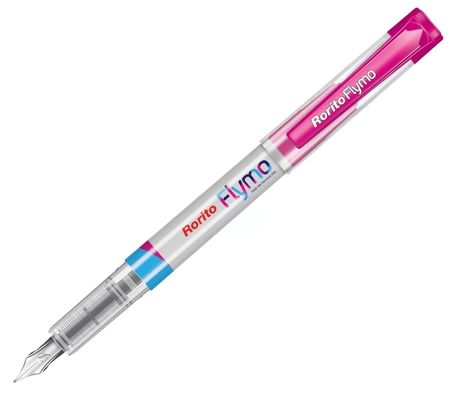
For smooth control and effortless ink flow during these first few drills, try a pen that rewards a lighter touch. Our Rorito Flymo Fountain Pen balances fluid movement with a steady grip, making it ideal for building relaxed, consistent strokes from Day 1.
Day 2 – Fix Individual Letters
Once your grip and posture are stable, the letter shape becomes predictable. Today, you standardise height, width, and proportion, which is what makes English handwriting look clear.
Start with the letters that most often blur into each other: a, e, o. Aim for consistent x-height (roughly 4–5 mm on ruled paper) and smooth oval forms without wobble. Next, move to the “hump” family: m, n, u. Keep the humps even and the spacing identical.
Work in groups, not randomly: 20 repetitions per letter, then 10 repetitions of short pairs (an, en, on, mum, nun). Maintain a gentle right slant if that suits you, but keep it consistent. The goal is repeatable shapes, not decorative style.
Day 3 – Join Letters into Words for Clear Handwriting
Good letters still look messy if spacing collapses. Today, you turn clean shapes into readable words by controlling gaps and joins.
Write common words in rows: the, and, practice, handwriting, improve, clear, notes. Keep a small, consistent gap between letters and a clear gap between words (a simple rule: if you can’t see the word break at a glance, it’s too tight).
Use ruled paper to anchor your baseline so letters don’t float. Keep ascenders (b, d, h, l) tall and consistent, and keep descenders (g, y, p, q) the same depth each time. Write slowly enough to catch crowding before it becomes a habit.
Day 4 – Write Sentences and Control Speed
Neatness often disappears when you move from words to sentences. Day 4 is where you keep form steady while adding a gentle pace.
Copy 5–6 short sentences. Use: “The quick brown fox jumps over the lazy dog.” Then add everyday lines like: “Please call me after lunch.” “I will complete this work today.”
Focus on three things only: consistent letter size, straight baseline, and uniform slant. If you feel your grip tightening, pause, loosen your fingers, and restart the line. Speed is allowed, but only as a result of control, not at the cost of it.
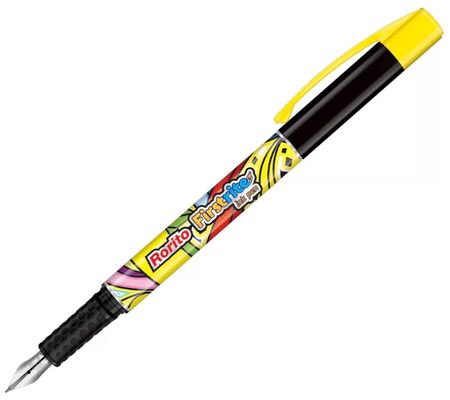
If you want a best indian fountain pen that supports steady practice, our Rorito Firstrite Ink Pen offers clean flow and a cushioned grip that helps stabilise your fingers while keeping your lines neat. It is an easy way to build control and consistency as you move into writing longer sentences.
Day 5 – Fix Common Handwriting Problems and Bad Habits
This is where handwriting improves fastest: you stop practising everything and drill what ruins explicitly yours. Pick your top 2–3 issues and correct them with targeted practice.
- Cramped letters: practise writing the same line at double size for one page, then return to standard size. Bigger shapes train cleaner movement.
- Inconsistent slant: draw faint slant guides (or use ruled paper angled consistently) and check each word against the guide.
- Heavy pressure or ink blobs: practise feather-light strokes. If you see thick spots or tearing, you are pressing rather than guiding.
Keep the corrections simple and measurable. One habit fixed well beats five habits “worked on” vaguely.
Day 6 – Real-Life Practice
If you only practise on drills, your handwriting improves on drills, not in life. Today, you make the skill hold up in real usage.
Fill one full page with practical writing: a to-do list, a meeting summary, a journal entry, or a paragraph copied from a book. Use the same rules: baseline discipline, spacing, and light pressure.
As you write, circle the words where your old habits return. Rewrite those words neatly underneath. This is how you turn “practice handwriting” into “better handwriting by default.”
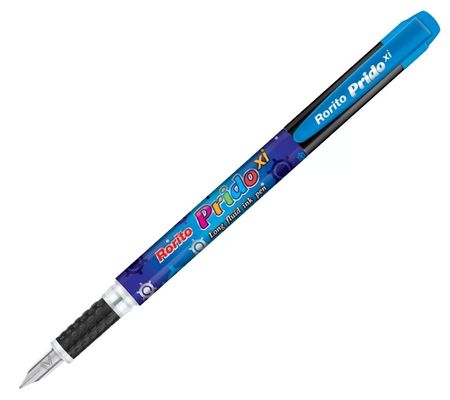
Longer writing sessions call for a pen that stays balanced, even after pages of notes. Our Rorito Prido Xi-2 is designed for comfort and control, helping you maintain flow and clarity across full paragraphs without hand fatigue.
Day 7 – Test on Plain Paper
Ruled lines are training wheels. Today, you prove your progress without them. On a blank A4 sheet, write half a page at normal pace: a short letter, a daily plan, or a summary note. Then assess it honestly:
- Are letter sizes consistent without lines?
- Does your baseline stay straight “invisibly”?
- Is it readable at arm’s length?
Finally, compare it with your Day 1 sample. The difference you want is not perfection. It is clearer, steadier, and easier to read without effort.
The Pen-Down Problem
Have you ever picked up a pen and instantly wanted to keep writing, not because you had to, but because the flow felt that smooth, almost ASMR-like on the page? That is the feeling we build for at Rorito. We focus on pens that glide without skipping, sit comfortably in your hand, and offer a secure grip that helps you stay relaxed rather than tense. When the ink flow is consistent and the balance feels right, your hand naturally steadies, pressure becomes lighter, and letter shapes start to look more controlled. That is where good handwriting begins, not with trying harder, but with writing more comfortably and more consistently. The result is simple: once you start, you do not want to put the pen down.
Pick your Rorito pen and let your handwriting flow!
Summing Up
Good handwriting is not a talent you are born with; it is a skill you build through small, consistent choices. When you follow the 7-day plan, focus on one or two weak areas, and practise with a relaxed hand, you will start seeing visible changes in spacing, letter size, and overall clarity. Keep it simple, keep it daily, and measure your progress using the same short sample from Day 0 to Day 7.
If this helped you, share it with a friend or your child, and see the difference in 7 days!
FAQs
Good handwriting comes from consistency. Focus on even spacing, stable letter size, and clean baseline control. A short daily routine beats occasional long practice.
Pick only two problems to fix first, usually spacing and baseline. Track those daily for 7 days. Most “bad handwriting” is simply inconsistent spacing and letter height.
That is common. Use the two-speed method: neat line first, then slightly faster, then normal speed. Your goal is readable speed, not rushed speed.
Practise the style you use most. If your daily writing mixes both, stabilise one style first for a week, then reintroduce the other.
Spacing between words. When word gaps are even, the whole page looks more organised.
Yes, our fountain pen collection is crafted for smooth, controlled writing. Each model ensures effortless ink flow, minimal pressure, and a steady grip; ideal for anyone improving handwriting or enjoying the elegance of fine writing instruments.
Absolutely. Our pens are designed for both practice and everyday writing. The balanced construction and stainless-steel nibs deliver a fluid writing experience that helps you maintain steady strokes without strain.